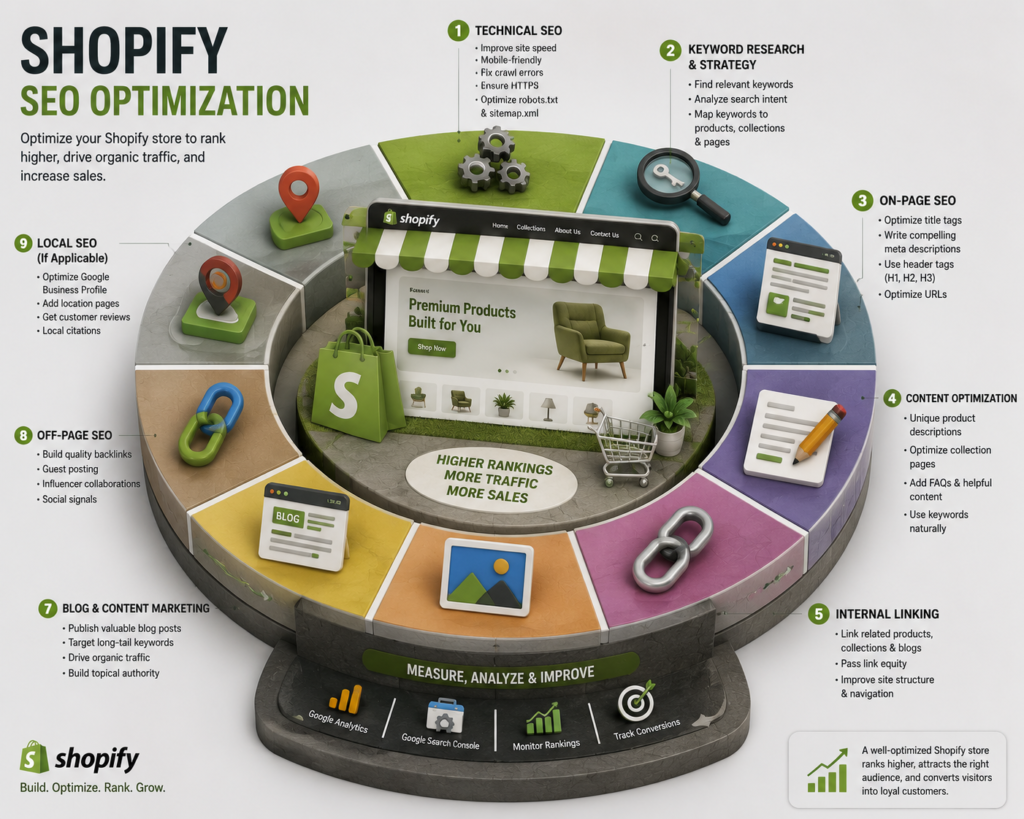
Launching a Shopify store is only the first step. To generate consistent sales, your products must appear where customers are actively searching—on search engines. This is where Shopify SEO optimization becomes essential.
Search Engine Optimization (SEO) helps your Shopify store rank higher for relevant keywords, attract qualified traffic, and reduce dependency on paid advertising. A well-optimized Shopify website can continuously bring in visitors and sales without increasing advertising costs.
Whether you are a startup, a growing eCommerce brand, or an established retailer, investing in SEO creates long-term visibility and sustainable revenue growth.
What is Shopify Store Optimization?
Shopify SEO optimization is the process of improving your Shopify store so that search engines can better understand, index, and rank your pages.
It involves:
- Technical SEO improvements
- Keyword research and mapping
- Product page optimization
- Collection page optimization
- Content marketing
- Internal linking
- Site speed improvements
- Structured data implementation
- User experience enhancements
- Authority building through backlinks
The goal is simple: make your store more visible to people searching for products you sell.
Benefits of Shopify SEO Optimization
1. Increase Organic Traffic
SEO helps your store appear for high-intent searches, bringing visitors who are already interested in your products.
2. Improve Conversion Rates
Organic visitors often convert better because they actively searched for the product rather than discovering it through an advertisement.
3. Reduce Paid Advertising Costs
A strong organic presence can lower your dependence on PPC campaigns and improve your overall marketing ROI.
4. Build Brand Authority
Websites that consistently rank high in search results are generally perceived as more trustworthy by customers.
5. Generate Long-Term Growth
Unlike paid ads, SEO continues to deliver traffic even after the initial optimization work is completed.
Essential Shopify SEO Optimization Strategies
Conduct Keyword Research First
Before optimizing pages, identify the keywords your audience uses.
Focus on:
- Transactional keywords
- Product-specific keywords
- Category keywords
- Informational keywords
- Long-tail keywords
- Comparison keywords
For example:
| Keyword Type | Example |
|---|---|
| Product | Organic Green Tea |
| Category | Buy Herbal Tea Online |
| Informational | Benefits of Green Tea |
| Comparison | Green Tea vs Black Tea |
Targeting multiple search intents helps capture customers throughout their buying journey.
Optimize Product Pages
Product pages are among the most important revenue-generating pages.
Optimize:
Product Title
Include the primary keyword naturally.
Meta Title
Keep it compelling and within recommended character limits.
Meta Description
Highlight benefits, features, and a strong call-to-action.
Product Description
Write unique descriptions instead of using manufacturer content.
Image Alt Text
Describe the image clearly while including relevant keywords.
Product URL
Keep URLs short and descriptive.
Example:
yourstore.com/products/leather-office-chair
instead of:
yourstore.com/products/item-12345
Optimize Collection Pages
Collection pages often rank for broader and higher-volume keywords.
Examples:
- Men’s Running Shoes
- Organic Skincare Products
- Luxury Home Decor
Include:
- Introductory content
- Optimized headings
- Internal links
- Unique meta tags
- SEO-friendly descriptions
Improve Site Structure
A clean website structure helps both users and search engines navigate your store.
Example:
Home → Collection → Product
Avoid creating unnecessary layers or duplicate collections that can confuse search engines.
Enhance Shopify Site Speed
Page speed directly impacts both rankings and user experience.
Ways to improve speed:
- Compress images
- Use modern image formats
- Remove unnecessary apps
- Minify code when possible
- Limit heavy scripts
- Use lightweight themes
Fast websites often experience lower bounce rates and higher conversions.
Implement Structured Data
Schema markup helps search engines understand your content and can improve visibility through rich results.
Useful schema types include:
- Product schema
- Review schema
- Breadcrumb schema
- FAQ schema
- Organization schema
Structured data can increase click-through rates by displaying additional information directly in search results.
Build Internal Links
Internal linking distributes authority across your website and helps search engines discover important pages.
Link:
- Blogs to collections
- Collections to products
- Related products together
- Guides to category pages
This also improves user engagement and browsing experience.
Create SEO-Focused Content
Content marketing is a powerful way to target informational searches.
Examples:
- Buying guides
- Product comparisons
- How-to articles
- Industry trends
- FAQs
- Tutorials
Informational content attracts potential customers earlier in the purchasing journey and nurtures them toward conversion.
Optimize for Mobile Users
Most Shopify traffic comes from mobile devices.
Ensure:
- Responsive design
- Fast mobile loading times
- Easy navigation
- Large tap targets
- Readable fonts
- Simple checkout processes
Mobile usability is a critical ranking and conversion factor.
Why Businesses Hire a Shopify SEO Agency
Managing SEO effectively requires expertise, consistent monitoring, and ongoing optimization. This is why many businesses choose to work with a Shopify SEO agency.
A professional Shopify SEO agency typically handles:
- Technical SEO audits
- Keyword research
- Competitor analysis
- Product page optimization
- Collection page optimization
- Content strategy
- Schema implementation
- Link building
- SEO reporting
- Performance tracking
This allows business owners to focus on inventory, customer service, and growth while specialists manage search visibility.
How to Choose the Right Shopify SEO Agency
Before hiring a Shopify SEO agency, consider the following:
Proven Results
Look for measurable improvements in rankings, traffic, and revenue.
Shopify Experience
Shopify has platform-specific SEO considerations, so experience matters.
Transparent Reporting
Agencies should provide clear reports and explain progress in understandable terms.
Custom Strategies
Avoid agencies that use identical SEO plans for every store.
Long-Term Approach
Sustainable SEO focuses on organic growth rather than quick ranking tricks.
Common Shopify SEO Mistakes to Avoid
Many stores struggle because of these issues:
- Duplicate content
- Thin product descriptions
- Missing metadata
- Slow page speed
- Poor internal linking
- Keyword stuffing
- Unoptimized images
- Ignoring technical SEO
- No content strategy
- Broken links
Fixing these problems can significantly improve organic performance.
Final Thoughts
Shopify SEO optimization is not a one-time task. Search algorithms, customer behaviour, and competitors constantly change. Consistent optimization, high-quality content, technical improvements, and a strong user experience are essential for maintaining visibility and growing organic revenue.
If your goal is long-term eCommerce success, investing in SEO or partnering with an experienced Shopify SEO agency can provide a sustainable advantage over competitors who rely solely on paid advertising.
FAQs
How long does Shopify SEO take to show results?
Most stores start seeing noticeable improvements within three to six months, depending on competition, website authority, and the quality of SEO implementation.
Is Shopify good for SEO?
Yes. Shopify includes many built-in SEO features such as editable meta tags, mobile responsiveness, sitemap generation, and secure hosting.
Can I do Shopify SEO myself?
Yes, beginners can handle basic optimization. However, advanced technical SEO and large-scale eCommerce strategies often require professional expertise.
Why hire a Shopify SEO agency?
A Shopify SEO agency brings specialized experience, saves time, and helps implement advanced strategies that can accelerate organic growth.
Does SEO increase Shopify sales?
SEO primarily increases targeted organic traffic. Higher-quality traffic often leads to improved conversions and increased sales over time.