
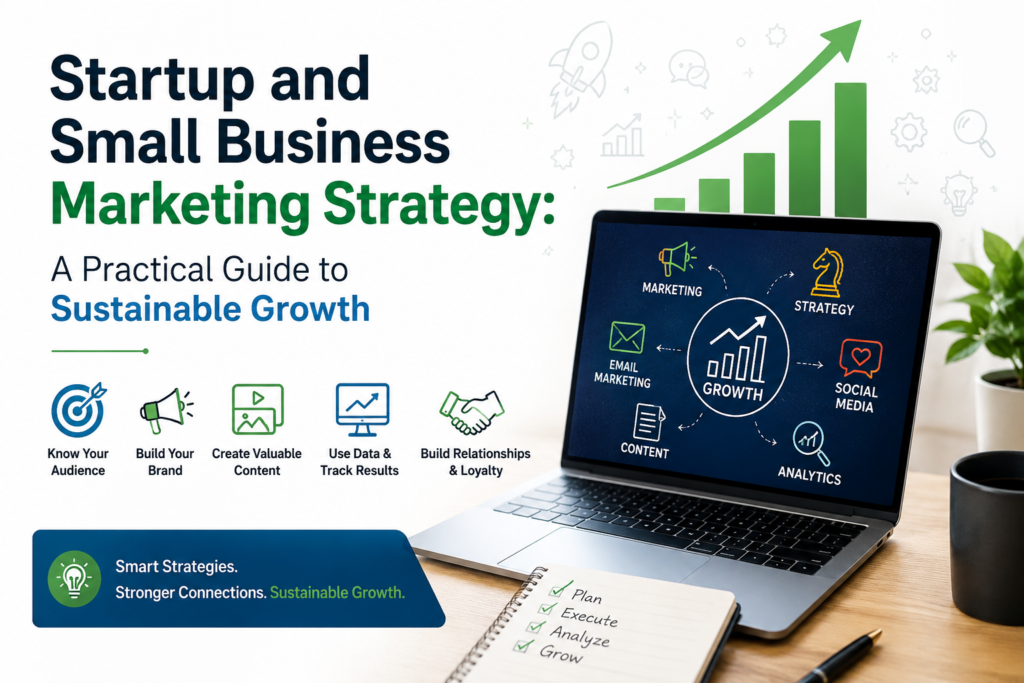
Starting a business is exciting, but attracting customers consistently is one of the biggest challenges for startups and small businesses. Many business owners invest time and money in different marketing channels without having a clear strategy. As a result, their efforts may not produce consistent leads, sales, or long-term growth.
A well-planned startup business marketing strategy helps you understand your audience, communicate your value, choose the right channels, and measure what is actually working. You do not need a huge marketing budget to get started. What matters most is having a clear understanding of your customers and focusing your resources on activities that support your business goals.
This guide explains how startups and small businesses can create a practical marketing strategy that builds visibility, attracts the right audience, and supports sustainable growth.
1. Define Your Business Goals
Before choosing a marketing channel, decide what you want to achieve. A startup looking for its first customers will need a different strategy from an established small business trying to increase repeat purchases.
Your goals could include:
- Increasing brand awareness
- Generating website traffic
- Getting more enquiries
- Increasing online sales
- Growing a customer database
- Improving local visibility
- Increasing repeat business
Make your goals specific and measurable. For example, instead of saying “get more customers,” set a goal to generate 50 qualified enquiries within three months.
Clear goals help you decide where to invest your time and budget.
2. Understand Your Target Audience
Effective marketing begins with understanding the people you want to reach. Consider:
- What problem does your product or service solve?
- Who is most likely to need it?
- What questions do potential customers ask?
- What prevents them from making a purchase?
- Where do they search for information?
Customer reviews, sales conversations, website analytics, and social media comments can provide valuable insights.
When your marketing reflects the real needs and language of your audience, your message becomes more relevant and persuasive.
3. Build a Strong Brand Foundation
Your brand is more than your logo or colour scheme. It includes the experience customers associate with your business.
A strong foundation should clearly communicate:
- What your business offers
- Who you serve
- Why customers should choose you
- What makes your business different
Your website, social media profiles, advertisements, and other marketing materials should communicate a consistent message. Consistency makes your business easier to recognize and helps build confidence among potential customers.
4. Create a Professional Online Presence
For many customers, your website is their first interaction with your business. It should be easy to use, informative, and designed around customer needs.
Your website should include:
- A clear explanation of your products or services
- Simple navigation
- Contact information
- Strong calls to action
- Customer reviews or testimonials
- Frequently asked questions
- Mobile-friendly pages
A professional website does not need to be complicated. It needs to answer important questions quickly and make it easy for visitors to take the next step.
5. Use Content to Answer Customer Questions
Content marketing can help startups and small businesses build visibility and credibility over time. Instead of publishing content only to promote your business, focus on answering questions your potential customers are already asking.
Useful content may include:
- How-to guides
- Product comparisons
- Industry insights
- Frequently asked questions
- Case studies
- Customer success stories
- Practical checklists
For example, a local accounting firm could publish content about tax preparation, business expenses, and financial planning. This type of content can attract people who are actively looking for information and may eventually need professional services.
Clear, accurate, and genuinely useful content is more likely to earn attention from both customers and search platforms.
6. Focus on Search and Local Visibility
Search marketing is especially valuable for small businesses because it can help you reach people who are already looking for a solution.
Start with:
- Researching relevant search terms
- Optimizing important website pages
- Creating useful content
- Improving website speed and usability
- Building internal links between related pages
- Keeping business information accurate online
For businesses serving a specific area, local visibility is equally important. Make sure your business name, address, phone number, opening hours, services, and customer reviews are accurate across important online platforms.
7. Choose the Right Marketing Channels
You do not need to be active on every platform. Choose channels based on where your customers spend time and how they make purchasing decisions.
Possible channels include:
- Organic search
- Social media
- Email marketing
- Paid advertising
- Local marketing
- Partnerships
- Referral marketing
- Industry communities
A small business may achieve better results by consistently managing two or three channels rather than spreading limited resources across ten.
8. Build Trust Through Real Business Experience
Customers want to know whether a business can deliver what it promises. Show your experience through:
- Customer reviews
- Case studies
- Demonstrations
- Original photos
- Team information
- Helpful expert advice
- Clear business details
Avoid making exaggerated claims that cannot be supported. Genuine examples and transparent communication are often more persuasive than generic promotional statements.
9. Measure Your Marketing Performance
Marketing decisions should be based on evidence rather than assumptions. Track metrics that connect directly to your business goals.
Important measurements may include:
- Website visitors
- Organic traffic
- Leads and enquiries
- Conversion rate
- Cost per lead
- Sales
- Repeat customers
Review your performance regularly. If one strategy is generating qualified customers while another is not producing results, adjust your resources accordingly.
10. Common Marketing Mistakes to Avoid
Startups and small businesses often make these mistakes:
- Trying to target everyone
- Changing strategies too frequently
- Focusing only on follower counts
- Ignoring customer feedback
- Publishing content without a clear purpose
- Failing to track results
- Expecting immediate results from every channel
A successful marketing strategy usually develops through consistent effort, testing, learning, and improvement.
Final Thoughts
A successful small business marketing strategy does not need to be expensive or complicated. The most effective approach begins with understanding your customers, defining clear goals, building trust, and choosing marketing channels that support your business objectives.
Create useful content, maintain a professional online presence, measure your results, and continue improving based on what you learn. Over time, these consistent efforts can help your business build stronger visibility, attract more qualified customers, and create sustainable growth.
FAQs
What is a startup and small business marketing strategy?
It is a structured plan that defines how a startup or small business will reach its target audience, promote its products or services, generate customers, and achieve its business goals.
What is the most effective marketing strategy for a small business?
The best strategy depends on your audience and business model. A combination of a professional website, search visibility, useful content, local marketing, referrals, and selected social media channels can be effective for many small businesses.
How much should a startup spend on marketing?
There is no single amount that works for every business. Start with a realistic budget based on your revenue, goals, and available resources. Focus on measuring results and gradually increase investment in channels that generate valuable outcomes.
How long does it take for a marketing strategy to work?
Some channels, such as paid advertising, can produce results quickly. Others, such as organic search and content marketing, generally require consistent effort over a longer period. Results depend on your industry, competition, budget, and execution.
Should a small business use every digital marketing channel?
No. Using every channel is not necessary. It is usually more effective to focus on the platforms and marketing methods that your target customers actually use.
How can a small business improve its online visibility?
Start by creating a useful website, publishing relevant content, maintaining accurate business information, collecting genuine customer reviews, and consistently improving your online presence based on customer needs and performance data.